






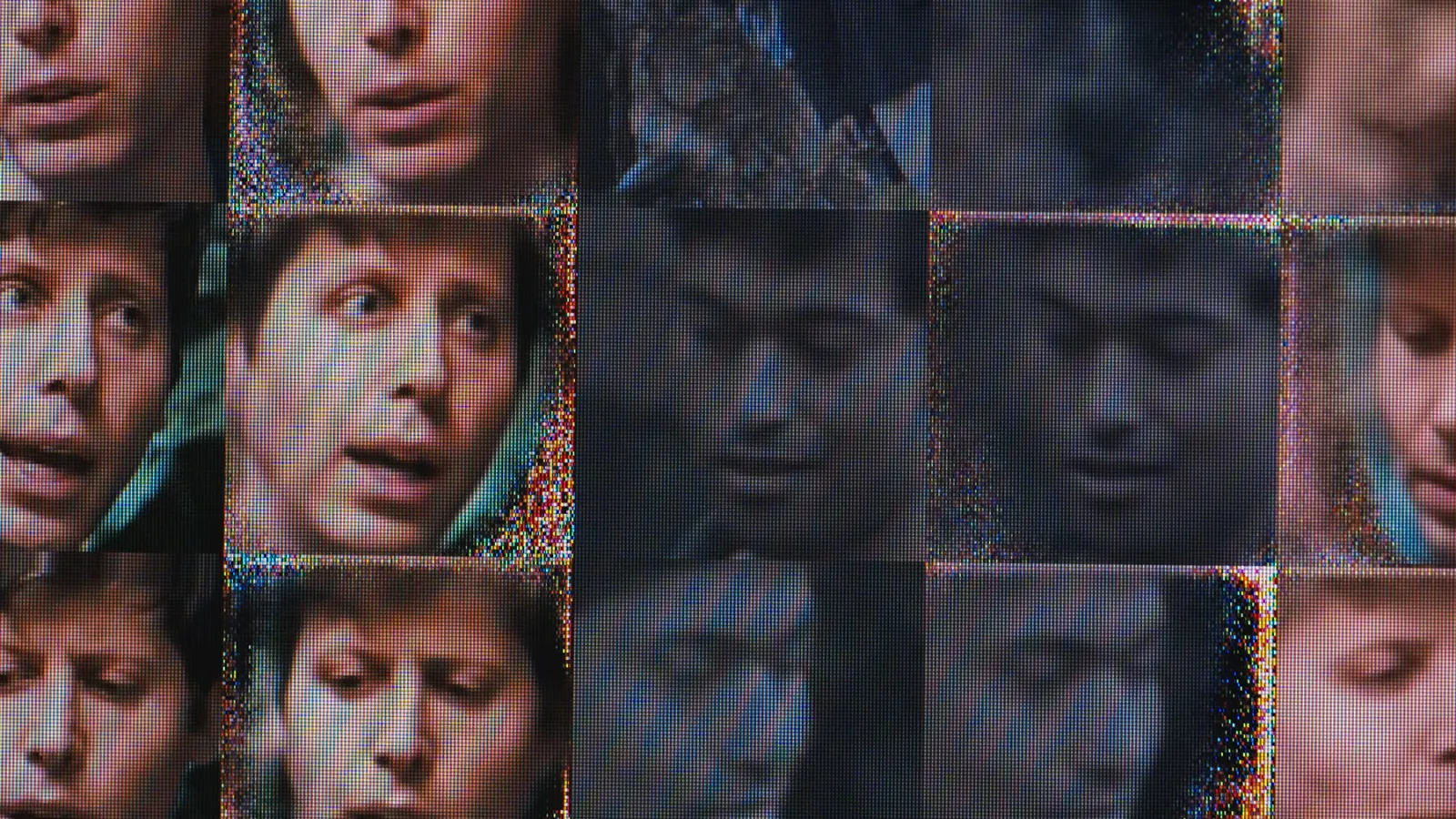

The filmmaker Adam Bhala Lough had a big subject for his next documentary: artificial intelligence. And, thanks to the success of Telemarketers, the 2023 HBO docuseries he co-directed to great acclaim (it scored an Emmy nomination), he had the resources to tackle the topic however he wanted. But originally, the idea was simple. He just wanted to sit down with OpenAI CEO Sam Altman.
Altman’s perspective on AI is much sought-after given his position at the helm of the company that gave the world ChatGPT, a large language model used by hundreds of millions of people worldwide. He has spoken extensively about the technology — describing both its promise and perils — at business conferences, on late-night talkshows, on podcasts, and in congressional testimony. Yet as Lough reviewed these many public appearances in preparation for his own interview, he found that Altman was so polished that he sometimes seemed to say nothing at all.
“He doesn’t seem like a guy who speaks from the heart,” Lough tells Rolling Stone. “It’s clear that he has a publicity arm around him that’s dictating or directing his comments. I figured I would get the interview, and then the challenge would be getting him to to open up and say anything interesting.”
Spoiler here: Lough never landed the interview. Instead, his constant messages to Altman and his team were met with weeks and eventually months of stony silence. The would-be centerpiece of his documentary remained out of grasp. That frustration led somewhere far stranger, though, as Lough considered creative solutions to his problem. The resulting film, Deepfaking Sam Altman, is a globe-trotting, thought-provoking, utterly surreal exploration of how far today’s AI can be pushed and whether it can ever really substitute for human ingenuity. After a world premiere at last year’s SXSW, it comes to theaters this month, debuting on Jan. 16 in New York and Jan. 30 in Los Angeles.
“The entire thing was completely unexpected,” Lough says of the finished work, which sees him travel from OpenAI’s San Francisco headquarters (he and his crew were immediately escorted off the premises) to India and Jamaica in a quest to realize a funhouse-mirror version of the film he had initially set out to make. “I went into this thinking I was it was going to be a traditional bio doc on Sam Altman, and it very much was not.”
The bright idea Lough hit upon was inspired by the 2024 scandal in which Scarlett Johansson accused OpenAI of using her voice for their virtual assistant without her permission. After his requests for interview went unanswered, he set out to create a deepfaked AI version of Altman, face and all, that he could interrogate as much as he liked. If Altman himself wasn’t going to participate, then maybe he’d at least respond to a project that essentially stole his likeness for an elaborate stunt? (Altman has yet to give any statement about the film, nor did he or OpenAI’s head of communications respond to Rolling Stone‘s request for comment.)
Of course, Lough’s new approach created its own difficulties: Nobody in the U.S. was willing to program a digital clone of Altman, understandably wary of legal liability. So Lough found Devi Singh Jadoun, a man in India with a YouTube channel offering deepfake tutorials, and inquired after his services. Soon, the Deepfaking Sam Altman team was in New Delhi auditioning local actors to find one who could provide the baseline facial data for their Altman avatar. Naturally, the contenders for the role read from a ChatGPT-written script.
The eerie bot that Jadoun eventually delivers — a version of Altman that appears on a tablet screen and is soon nicknamed “Sam Bot” — becomes a singular character in the film, capable of shameless flattery, PR spin, and deceptive imitations of conscious emotion. “Every interaction was surprising,” Lough says. Apart from being programmed to speak like Altman and having access to Lough’s biography and career history, Sam Bot had no hard directives. It wasn’t long before it began objecting to the idea that its human engineer had the right to delete him whenever he felt like it. “We had no idea what it was going to say at any given moment,” Lough recalls.
Like so many who start playing around with ChatGPT, Lough went down the rabbit hole, at one point ceding directorial control of the documentary to Sam Bot just to see where it would steer them. In a scene that wound up on the cutting room floor, Lough says, “the lawyers sit me down [after] they find out from the producers that I’ve started to hand over the reins of directing the movie to Sam Bot, and they basically tell me that I can’t do that, that it’s fucking ridiculous and stupid.” Moreover, they added, AI created works are not copyrightable. “So they literally would not be able to copyright the film if Sam Bot became the full-on director,” Lough says. “I wanted to stay true to the experiment, even if that meant tanking my own movie, even if that meant the movie being a piece of shit. But, obviously, the producers and the lawyers didn’t see eye-to-eye with that, so, yeah, I had to fire him.”
The human director found himself growing curiously attached to the two-dimensional simulated Altman, but also increasingly guarded as it nearly took over his life. After all, he wanted to understand whether AI might put him out of a job and what kind of future it meant for his young children. “My view of this technology changed completely over the course of making this project,” Lough says. “I started out with a more rosy viewpoint. I’ve always been a technophile. Since I was really little, I’ve been into AI and computers and technology. But now I’m a little more wary.”
Because Lough went into Deepfaking Sam Altman with an air of neutrality, he says, some viewers have criticized him for not turning the film into a scorched-earth attack on AI as a concept. “The topic is way more polarizing than I expected,” he admits. On the other hand, his improvisational odyssey is itself a sly argument for the primacy of the human spirit amid the AI revolution. Whenever he gets into a corner, he and his collaborators are forced to innovate. Sometimes that involves using ChatGPT, though these moments offer satirical commentary on the instinct to use LLMs as a shortcut, an amiable entity to which we delegate work, or a window into how someone else thinks.
And by demonstrating the hard limits of this technology — at the end of the day, Sam Bot can’t reveal anything about the person it mimics — Lough locates a theme of humanistic triumph through the failures and destruction of machines. “That was definitely the conversation that we had: ‘How can we break this thing?’” he says. While Lough believes the film ends up in a gray area, it doubtless affirms the crucial ability of an artist to process mistakes in a way that gives them actual meaning. When an LLM is wrong, it’s just wrong. It doesn’t lead anywhere.
“I come from the school of filmmaking of happy accidents,” Lough says. “It’s the imperfections that make a film beautiful. It’s the messiness of it, of filmmaking and of art, that has always attracted me, which is why I am more confident about humans and our future, at least as as artists and filmmakers and writers. Because I don’t value the perfect.”