




From an epic of political resistance to a personal take on a literary classic — the highlights of a very, very good year for movie lovers
2025 was a year that posed a lot of questions for movie lovers: Did the success of Sinners prove that there was still a mass audience hungry for original (re: non-IP) stories on a blockbuster level? Does Ryan Coogler’s historic deal regarding the film rights reverting back to him in 25 years change how Hollywood deals with creative talent? How would James Gunn’s reboot of Superman transform the fate and fortunes of the DC cinematic universe? What was the ideal format to see One Battle After Another? Which would be the bigger existential threat to the medium — the continuing atrophy of the traditional theatrical experience or the introduction of the first A.I. “star”? Would Hamnet make you cry two gallons of tears, or three? Was Brad Pitt really driving those Formula 1 cars in F1? What the hell, exactly, is a KPop Demon Hunter?
It was also a truly great year for great movies, period — we had to kill a number of darlings to get the following best-of-2025 down to 20. And between the various film-festival premieres, brief Oscar-qualifying runs, streaming-only standouts and a number of left-field surprises, we could have easily doubled this list. A number of namebrand auteurs reminded you why they’ve earned the title. Several newcomers released the sort of knockout debut features that gave you hope for the future. You got not one but two back stories behind the making of not one but two very different masterpieces, set centuries apart. For every major disappointment, there were two or three other big swings that connected in ways that inspired audiences, instigated conversations, and instilled hope in a way that the world outside of the theater did not.
These 20 titles aren’t just the highlights of the last 12 months. They’re the ones we’ll likely be going back to year after year. From an epic of resistance to a personal reimagining of a gothic horror classic, welcome to the best movies of 2025.
(Special shout-outs as well to: Blue Moon, F1, Is This Thing On?, John and Yoko: One on One, My Undesirable Friends, The President’s Cake, The Secret Agent, Sinners, Sirat, and The Voice of Hind Rajab.)
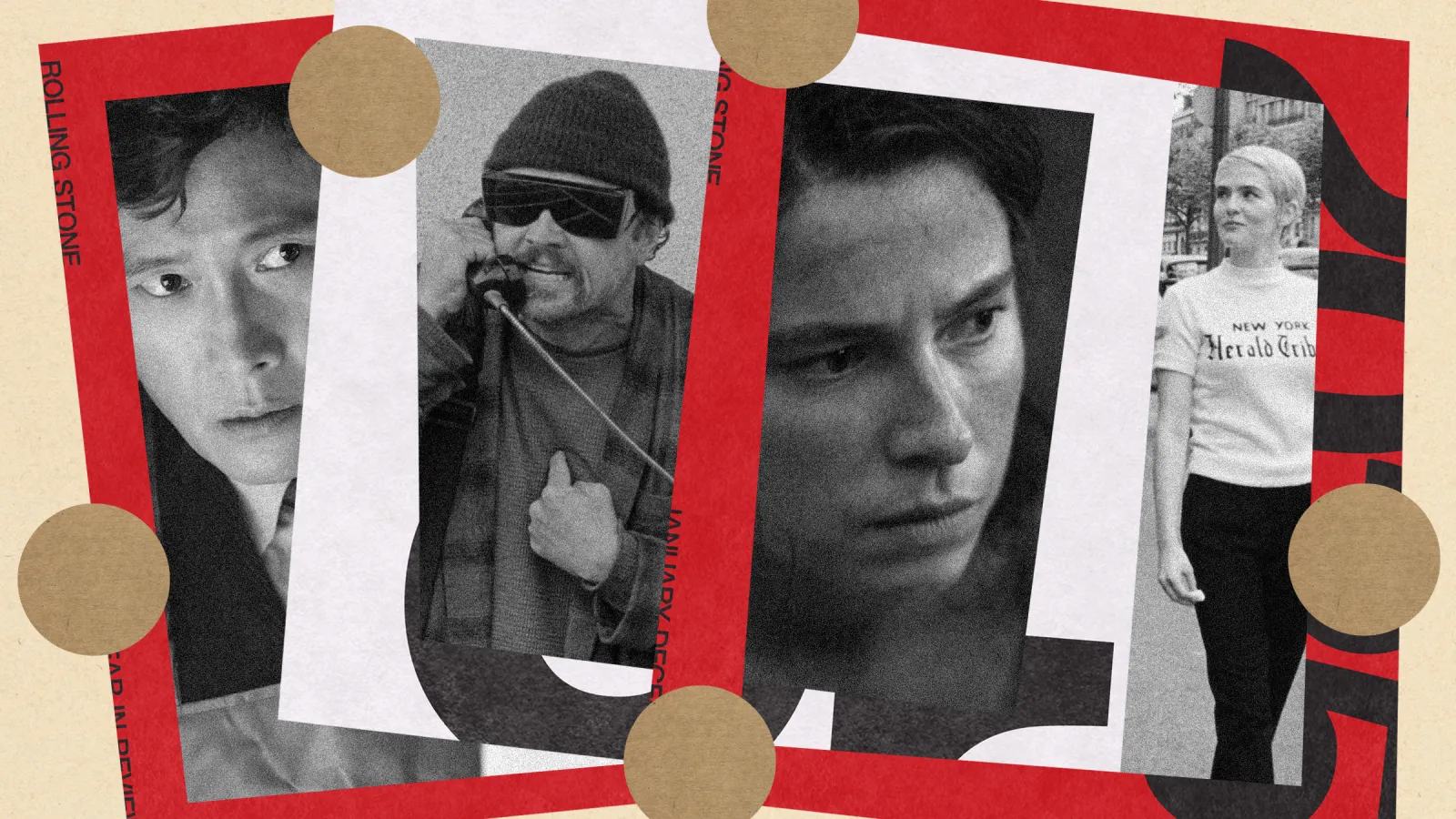
Photographs in Illustration
Neon; Warner Bros.; Agata Grzybowska/Focus Features; Netflix
-
‘Weapons’


Image Credit: Warner Bros. Pictures. By this point, you likely know the central secret behind writer-director Zach Cregger’s ambitious follow-up to his Air BnB horror flick Barbarian (2022), as well as understanding why veteran actor Amy Madigan is now generating a lot of awards-season heat for her portrayal of a mysterious, unwelcome houseguest. Even after all of this psychological thriller’s cards have been turned over, however, Cregger’s tale regarding the unexplained disappearance of 17 children in the middle of the night still manages to cast a chill. Juggling several different narratives and re-viewing events from the perspectives of a teacher (Julia Garner), one of her young students (Cary Christopher, amazing), the father (Josh Brolin) of a missing kid and several others, the movie has a penchant for toying with viewers in the same way a predatory cat toys with a wounded mouse. The go-for-broke climax is well-earned, yet it’s the deft way that Cregger weaves between storylines and sets everything up for the kill that sticks with you more than the payoff itself. It’s a horror movie that knows how to hit its targets. (Read the review here.)
-
‘Frankenstein’

Image Credit: Netflix Guillermo del Toro finally tackles the movie he was born to make, and his take on Mary Shelley’s misunderstood monster and the man who made him is exactly what you’d hoped for: tony yet pulpy, tender yet perverse, faithful to the original source material while paying homage to all sorts of other Gothic and genre-related influences. Above all, however, it’s a passionately personal story about being an outcast, and trying to break cycles of bad parenting — no, seriously — that does not skimp on bringing the sound and the fury. Oscar Isaac’s Victor Frankenstein is part 18th-century dandy and part swaggering Swinging Sixties rock star, as if Lord Byron had been genetically spliced with Brian Jones. And for those who only know Jacob Elordi from Euphoria, his sympathetic interpretation of the creature as both an innocent and an angel of vengeance is eye-opening. (Read the review here.)
-
‘Caught by the Tides’

Image Credit: Janus Films Sifting through old footage during the pandemic, Chinese filmmaker Jia Zhangke (Unknown Pleasures, Still Life) came up with the idea of using outtakes and scenes from his previous films — all of which featured his longtime actors Tao Zhao and Zhubin Li — to craft something new. For a while, you ride shotgun through a stream-of-conscious tour through the nation’s cities and rural provinces, complete with corporate-sponsored pageantry and personal strife. It’s only when you get to the final third of the movie that Jia drops the hammer, and you suddenly realize that what felt like a free-form slideshow of China’s prosperity in the early 21st century has been carefully crafted to break your heart. (Read the review here.)
-
‘The Phoenician Scheme’

Image Credit: TPS Productions/Focus Features Wes Anderson scores big with this combo of corporate-espionage thriller, slapstick comedy, and father-daughter family drama, centered around Anatole “Zsa Zsa” Korda (Benicio Del Toro), international business-magnate of mystery. He’s trying to make sure his dream project involving a multinational transport system becomes a reality before he’s assassinated by rivals; if he can also mend fences with his estranged daughter (Mia Threapleton), who wants nothing to do with her dad and yearns to become a nun, that’s simply a bonus. It’s got all the usual hallmarks of an Anderson project, from an all-star ensemble cast to the meticulously composed imagery that’s made him a film-nerd idol. But this new film gels in a genuinely satisfying way that several of his recent works haven’t. And it gifts us with a real discovery in Threapleton, whose deadpan reactions, comic timing and chemistry with Del Toro make this feel like there’s a heart beating underneath it all. (Read the review here.)
-
‘On Becoming a Guinea Fowl’

Image Credit: Chibesa Mulumba/A24 Rungano Nyoni’s follow-up to 2017’s I Am Not a Witch starts with a woman named Shula (Susan Chardy) coming across a dead body in the road. The fact that she’s dressed exactly like Missy Elliott from “The Rain (Supa Dupa Fly)” video, down to the silver helmet and puffy black jumpsuit, shows you that Nyoni has a wicked sense of humor. The revelation that the corpse is “Uncle Fred,” a well-known pedophile who chronically abused the village’s young women for years without consequences, demonstrates that the movie is also not fucking around. A pointed take on the social protections afforded to predators to avoid “awkwardness,” the unnecessary shame shared by survivors and the need to call out complicity and speak out regardless of such stigmas. (Read the review here.)
-
‘Orwell: 2+2=5’

Image Credit: Neon Documentarian Raoul Peck returns with a look at George Orwell’s transformation from a cog in Britain’s colonialist machinery (he served on the police force in Burma in the 1920s) to political critic, essayist and world-renowned author of Animal Farm and 1984. Had the filmmaker merely delivered a documentary on the writer’s radicalization and warnings about power, corruption, and lies this would still make for essential viewing. But he goes several giant steps further, borrowing the expansive design of his magnum opus Exterminate All the Brutes (2021) and connecting the dots between those two dystopian novels, the 20th century’s totalitarian regimes, and the ways in which history tends to repeat itself. Like, say, in contemporary America. It’s a virtual firehose of doubleplusbad information on how fascism insidiously takes hold, collapsing the gap between then and now in a way that’s damn near overwhelming. You would not call the outlook “good.” You would recognize this dour primer as absolutely vital at this particular moment in time. (Read the review here.)
-
‘Best Wishes for All’

Image Credit: Shudder Films Something strange is going on at a quaint house in the countryside, where a Tokyo nursing student named (Kotone Furukawa) is visiting her grandparents. They seem a little too cheery at times, and completely checked out at others. Grandma keeps asking if her darling is “happy.” Strange noises keep echoing throughout the house after dark. The young woman doesn’t feel safe here — and that’s before she spies a fat, middle-aged man in dingy tighty-whiteys crawling past the kitchen doorway, his eyes and mouth sewn shut. Director Yûta Shimotsu’s debut feature had been kicking around the festival circuit before finally making it way here — and it’s no exaggeration to say this is, hands down, the best J-horror movie to hit these shores in decades. Everything from Furukawa’s performance to the sideways manner in which the story reveals its secrets and surreal, Lynchian interludes hits exactly as it needs to. Occasionally, a nudge is required to remind folks that privilege, luxury and personal fulfillment usually come with a price. This film shoves that notion right back in your face. (Read the review here.)
-
‘Universal Language’

Image Credit: Oscilloscope Laboratories Trust Canada’s absurdist Matthew Rankin (The Twentieth Century) to give us a vintage Iranian kid-centric drama, complete with subtitled Farsi dialogue and a visual vocabulary akin to 1970s Abbas Kiarostami-lite… and set the whole thing in the snowy, super-banal suburbs of his hometown Winnipeg. It initially feels like hipster film-nerd trolling, right down to the replica of the Tehran-based Kanoon institute’s logo (with a turkey instead of the organization’s signature songbird). But the longer you watch Rankin’s deadpan juxtaposition of styles, you more you begin to realize it’s not a goof so much as a mash note. There is no universal language except the lingua franca of seeing yourself reflected back in cinema made half a world away, and then responding in kind. (Read the review here.)
-
‘Eddington’

Image Credit: A24 Ari Aster’s fever dream of an Op-Ed on American carnage circa right-fucking-now was easily one of the single most divisive films of 2025 — which, frankly, fits the Hereditary director’s crackpot vision of a nation fatally at odds with itself to a tee. It’s one paranoid android of a fairy tale, disguised as a modern-day Western circa the early days of the pandemic, and centered around a showdown between a sheriff (Joaquin Phoenix) and a mayor (Pedro Pascal) in a small, fictional town in New Mexico. Here, all progressivism is performative, all red-pilled right wingers are one red cap away from going full MAGA, all painful personal experiences are ripe for political exploitation, all both-sides misanthropy gets dialed up to 11. What starts as a broad parody soon reveals itself to be a paranoid conspiracy thriller eerily attuned to our country’s center-cannot-hold bad vibes. Aster has given us another movie that chills you, unnerves you and makes you want to crawl out of your skin. You just wish this one didn’t feel so close to being nonfiction. (Read the review here.)
-
‘Peter Hujar’s Day’

Image Credit: Janus Films Ira Sachs (Keep the Lights On, Passages) focuses his attention on a single extended, IRL interview between writer Linda Rosenkrantz (Rebecca Hall) and her friend, photographer Peter Hujar (Ben Whishaw) in downtown NYC ’74. That’s it, but dear god, it’s more than enough to evoke a lost world of downtown scenesters, art-world gossip, funky fashion choices, post-Stonewall gay culture and Beat legends behaving badly. (The Allen Ginsberg anecdote alone is worth the price of admission.) A conversation between two chatty Lower East Side hipster luminaries — resurrected by two preternaturally gifted actors at the top of their game — doesn’t need much more than the camera to be in focus, to be honest. Yet the way in which Sachs turns their conversation into something like a time machine easily made this modest indie one hell of a standout. (Read the review here.)
-
‘Sentimental Value’

Image Credit: Christian Belgaux Joachim Trier’s family drama continues his winning streak after the highly praised The Worst Person in the World (2021) hit his creative reset button. It also reminded many of us why we initially fell in love with the Norwegian filmmaker’s work in the first place. Once again working with his longtime cowriter Eskil Vogt and his TWPITW star Renate Reinsve, Trier carefully constructs a morality tale around a once-prominent movie director (Stellan Skarsgård) hoping to make a comeback with a new project. He offers the role based on his daughter to his actual daughter, an anxiety-prone stage actor (Reinsve) with a grudge against dad. Then he decides to cast an American movie star (Elle Fanning) instead, and film the whole thing in their actual family house. A mild version of emotional chaos soon reigns. It’s the sort of bittersweet fable recognizable to anyone who’s struggled with paternal baggage, by which we mean everybody. And yet the way it uses their prickly dynamic to explore how storytelling can both mask hurt and facilitate healing goes way beyond just heroes and villains. Truly remarkable. (Read the review here.)
-
‘Marty Supreme’

Image Credit: A24 Josh Safdie finally gives ping-pong its own version of Rocky — if that sports-movie landmark felt like a two-hour panic attack, and its hero was less of a lovable underdog and more of an egotistical prick. Timothée Chalamet inches that much closer to being one of the greats with his portrayal of Marty Mauser, a world-class table tennis champion circa 1952 who functions as both his own hype man and worst enemy. He’s determined to score a rematch with his Japanese rival by any means necessary; so what if a few dozen bridges get burned in the process? It’s the most caustic American success story you can imagine, boasting the most eclectic cast of any movie this year (name another film that includes Gwyneth Paltrow, Fran Drescher, Tyler the Creator, Abel Ferrara, NBA hall-of-famer George Gervin and Shark Tank‘s Kevin O’Leary in its ensemble?), and bounces between down-and-dirty grit and old-fashioned uplift so much you begin to feel like one of these little white balls.
-
‘Sorry, Baby’

Image Credit: a24 From the “A Star Is Born” Dept.: Writer-director-actor Eva Victor instantly establishes herself as a multi-hyphenate to be reckoned with this semi-fractured, sometimes harrowing and often hilarious tale of a college professor dealing with a longstanding trauma. It would have been enough for Victor to translate an already pointed comic voice, honed through improv shows and viral tweets, to the screen. Yet her debut knows when to go for deadpan laughs and when to knock you flat with emotional haymakers; occasionally, as in a visit to a doctor whose bedside manner leaves something to be desired, the movie delivers both at once. The temptation is to compare Victor to Phoebe Waller-Bridge, especially since the movie gives off heavy Fleabag vibes (minus the fourth-wall breaking). But while they may be kindred spirits, this Brooklyn-by-way-of-San-Francisco artist is mining a wit and pathos that’s all her own. Throw in solid supporting performances from Naomi Ackie, Lucas Hedges and Louis Cancelmi, and you have a keeper here. (Read the review here.)
-
‘No Other Choice’

Image Credit: NEON Park Chan-wook (Sympathy for Mr. Vengeance, Decision to Leave) turns Donald E. Westlake’s 1997 novel about an unemployed businessman killing off potential rivals for jobs into a pitch-black comedy, one that’s both horrifying and laugh-out funny (see: a set piece involving a loud stereo, a home invasion, and a gun). Squid Game superstar Lee Byung-hun is a paper-company middle manager in Seoul who suddenly finds his middle-class life deteriorating after getting laid off. Desperate times mean desperate measures, which means murder is on the table as an option. Forget it, Jake, it’s late capitalism. Slapstick bits of business sidle up next to satirical jabs at the mercenary aspects of selling yourself as a job candidate and the less-than-level playing fields one is forced to navigate for creature comforts and self-worth. It’s bleak, thrilling, and a blast.
-
‘It Was Just an Accident’

Image Credit: Neon The overall premise of Iranian filmmaker Jafar Panahi’s award-winning parable is simple: A man (Ebrahim Azizi) finds his family trip interrupted when his car breaks down. A mechanic (Vahid Mobasseri) thinks he recognizes him as the person who tortured him for years in prison. He abducts the traveler, and then proceeds to round up several other former inmates to confirm that he is indeed the culprit. It plays at times like a nailbiting thriller, an elliptical road movie, and a sort of backstage farce revolving around a potential payback killing instead a theatrical production. Yet every moment of it attests to the work of a master, however, right down to one sublime gut punch of a final shot. It’s a work that purposefully sets out to question the need to even scores. There’s nothing accidental about it. (Read the review here.)
-
‘Nouvelle Vague’

Image Credit: Jean-Louis Fernandez/Netflix Anyone could technically craft a behind-the-scenes recreation of the making of Jean-Luc Godard’s gamechanging debut feature Breathless. Only Richard Linklater could turn it into a glorious hang-out movie, in which you get to ride shotgun with the critic-turned-cineaste-in-sunglasses as he and his fellow band of film-mad outsiders make history 24 frames per second. The way Linklater identifies everyone from 1960s Cahiers du Cinéma legends (Chabrol, Rivette, Truffaut, Rohmer) to deep-cut scenesters, then gathers all of the players together feels a little like he’s making The Avengers for the hardcore Letterboxd crowd — here’s all your favorite superheroes of the French New Wave, assembled for one great big collective adventure. Guillaume Marbeck’s take on Godard as a quote-spouting enfant terrible is priceless; Zoey Deutch chronicling Jean Seberg’s conversion from skeptic to true believer is sublime; Aubry Dullin’s Jean-Paul Belmondo is one big, goofy grin of a tribute. The whole thing is pure cinephile catnip. (Read the review here.)
-
‘Train Dreams’

Image Credit: Netflix You’ve probably heard the buzz steadily growing writer-director Clint Bentley’s adaptation of the Denis Johnson novella, about the life and times of a logger named Robert Granier (Joel Edgerton) practicing his trade in the early part of the 20th century. Believe the hype. It’s a meditative film that reminds you of early Terrence Malick, with its languorous shots of nature and philosophical narration as Granier witnesses the best and worst of this nation’s growing pains, falls in love with resourceful woman named Gladys (Felicity Jones), and experiences both peace of mind and great tragedy. (Bonus: You also get Kerry Condon as a sympathetic nature lover and William H. Macy going full Walter Brennan as a crazy old coot!) But the movie truly hinges on Edgerton, who gives the best performance of his career playing the kind of stoic, callous-handed man who helped build modern America from the ground up. There were many people like Granier who walked the earth and left without a noticeable trace. Yet, as this beguiling, beautiful character study proves, they too had stories to tell. They lived and loved and felt joy and sorrow. They mattered. (Read the review here.)
-
‘Black Bag’

Image Credit: Claudette Barius/Focus Features Steven Soderbergh’s take on love, marriage and espionage plays like Who’s Afraid of Virginia Woolf as written by John le Carré, as fellow spies/spouses Michael Fassbender and Cate Blanchett navigate a precarious situation involving a double agent in their organization. He’s been tasked with finding out who might behind the sale of classified information; she’s the prime suspect. From there, it gets complicated. Yet the sheer fun that the filmmaker, his leads and their co-stars — Pierce Brosnan, Tom Burke, Naomie Harris, Regé-Jean Page, Industry‘s Marisa Abel — are having as they both indulge in an old-school spy-vs.-spy thriller and use it as a metaphor for faith, trust and power struggles in relationships is contagious. You want movie-star glamour and a smart deconstruction of a genre? It’s all in the bag. (Read the review here.)
-
‘Hamnet’

Image Credit: Agata Grzybowska/Focus Features Meet the Shakespeares. Chloé Zhao‘s rigorous, moving, and altogether transcendent take on Maggie O’Farrell’s novel — about the untimely passing of William and Anne “Agnes” Shakespeare’s son Hamnet, and the way that tragedy inspired the Bard’s play Hamlet — immediately established itself as the movie of 2025 destined to leave you in a puddle on the floor. Yet it’s a chronicle of reckoning with death that nonetheless bursts with life, renewal, rebirth. Young Hamnet’s shuffling off this mortal coil once laid the groundwork for a masterpiece. It’s now done so twice. Paul Mescal makes for a rugged Shakespeare, and young actor Jacobi Jupe delivers a surprisingly sublime portrayal as the title character. Yet it’s Jessie Buckley’s performance that truly drives this grief-stricken tale, and the manner in which she ultimately finds a sense of solace and catharsis through art feels revelatory. The rest is silence. (Read the review here.)
-
‘One Battle After Another’

Image Credit: Warner Bros. Pictures Paul Thomas Anderson’s thundering, dizzying epic is a lot of things: a parable about fathers and daughters, a conspiracy thriller for the ICE age, an ensemble comedy that encourages all-stars to get their best eccentricity on, a take on Thomas Pynchon’s 1990 novel Vineland that’s less a straight, VistaVision adaptation than a passing nod to the author on the way to its own profound insights. Mostly, however, it’s a film that both captures our extremely fucked-up moment and somehow transcends it, creating a timeless tale about revolutionaries taking care of their own while getting the next generation to pick up the flag.
Everyone from old hands like Leonardo DiCaprio and Sean Penn to newcomer Chase Infiniti is on point here, though Teyana Taylor comes close to nabbing the MVP brass ring as the queen of guerrilla warfare. Every oddball detour, from underground-railroad dojos to the meetings of the clandestine Christmas Adventurers Club (Hail Saint Nick!), contributes to the bigger picture that PTA is sketching out of a world tilted off its axis. In its sprawling attempt to wrap its arms around the Great-Step-Backward Age we find ourselves in, One Battle After Another asks the question: How do you fight back when all seems lost? After several stoner-comedic set pieces, a couple of canon-worthy chase scenes, and a vibe that distills all the agony and the absurdity of the past 10 years into a free-floating angst, the movie delivers an answer. You fight back with love. That’s the only way you protect the future, and change it. That’s how you live to battle another day. (Read the review here.)